When Your Body Is Stuck in Survival Mode

Have you ever walked into a room and completely forgotten why you were there?
Found yourself scrolling on your phone even though you didn’t really want to be?
Felt exhausted all day—and then somehow unable to settle down when it was finally time to rest?
Maybe you’ve noticed yourself clenching your jaw, holding your breath, zoning out in conversations, feeling unusually irritable, or becoming overwhelmed by decisions that normally wouldn’t feel like such a big deal.
Sometimes we look at these things and think, What is wrong with me?
But they can also be signs that your nervous system is overloaded.
Your body is constantly paying attention
Your nervous system is always taking in information from the world around you and, in essence, asking one important question:
Am I safe?
When your brain and body perceive danger, an incredible survival system kicks into gear. Your heart rate might increase. Your breathing may change. Your muscles might tense. Your attention can narrow. You may feel an urge to fight, run, freeze, appease, or completely shut down.
These responses are how your body is designed to protect you.
The challenge is that after trauma or prolonged periods of stress, our internal alarm systems can become especially sensitive.
The danger may be over, but our bodies don’t always get the memo.
A stressful email, conflict with someone we love, a particular tone of voice, uncertainty, sensory overload, a memory—or sometimes something we can’t even identify—can activate the same survival responses that once helped protect us.
And when we’ve spent a long time living this way, survival mode can start to feel normal.
Healing isn’t only something we think our way through
For a long time, much of the conversation around healing focused on our thoughts and emotions.
Those things matter tremendously.
But so do our bodies.
Sometimes disconnecting from our bodies was part of how we survived in the first place. We learned not to notice hunger. Exhaustion. Tension. Pain. Fear. The need to slow down.
We learned to override ourselves.
So healing can also involve gently rebuilding that connection.
Not forcing ourselves to calm down.
Not telling ourselves we should feel safe.
But beginning to give our bodies new experiences and new information about what is happening right now.
I’m here.
I’m supported.
I can slow down.
I can notice what I need.
I have choices.
That’s where simple nervous-system practices can be incredibly helpful.
You don’t need another complicated thing to do
If you’re already overwhelmed, the last thing you need is a 47-step morning routine designed to make you less overwhelmed.
Sometimes the most helpful practices are incredibly simple.
Looking around the room and noticing where you are.
Feeling your feet against the ground.
Using gentle, rhythmic touch.
Changing the rhythm of your breathing.
Giving your body physical support.
These aren’t magic tricks, and no single practice works for everyone. But they can be simple ways of helping your body reconnect with the present moment.
That’s why I created the Simple Nervous System Reset Guide.
It includes 10 gentle practices you can experiment with when you’re feeling stressed, scattered, disconnected, activated, or overwhelmed, along with simple instructions and an explanation of why each practice may help.

Reset Your Nervous System
10 gentle practices to help your body move from overwhelm toward greater calm and connection.
Keep it on your phone. Print it out. Come back to it when you need it.
And most importantly, pay attention to your body. You don’t have to do every practice. If something doesn’t feel supportive, you can stop.
And sometimes we need to go deeper
Nervous-system tools can help us in the moment.
But regulation isn’t the same thing as healing what created our survival patterns in the first place.
Sometimes we need space to understand:
Why do I keep responding this way?
Where did I learn to disconnect from myself?
Why are boundaries so difficult for me?
Who am I outside of what happened to me?
What would it look like to build a life that isn’t organized around survival?
That’s deeper work. And don’t look at me cross-eyed right now…but this deeper work can even be fun sometimes.
Not all of the time. I don’t want to sugarcoat it. But healing doesn’t have to be about constantly excavating trauma. In fact, so much of healing is about finding joy, building resilience, and discovering who you are outside of who trauma taught you that you had to be.
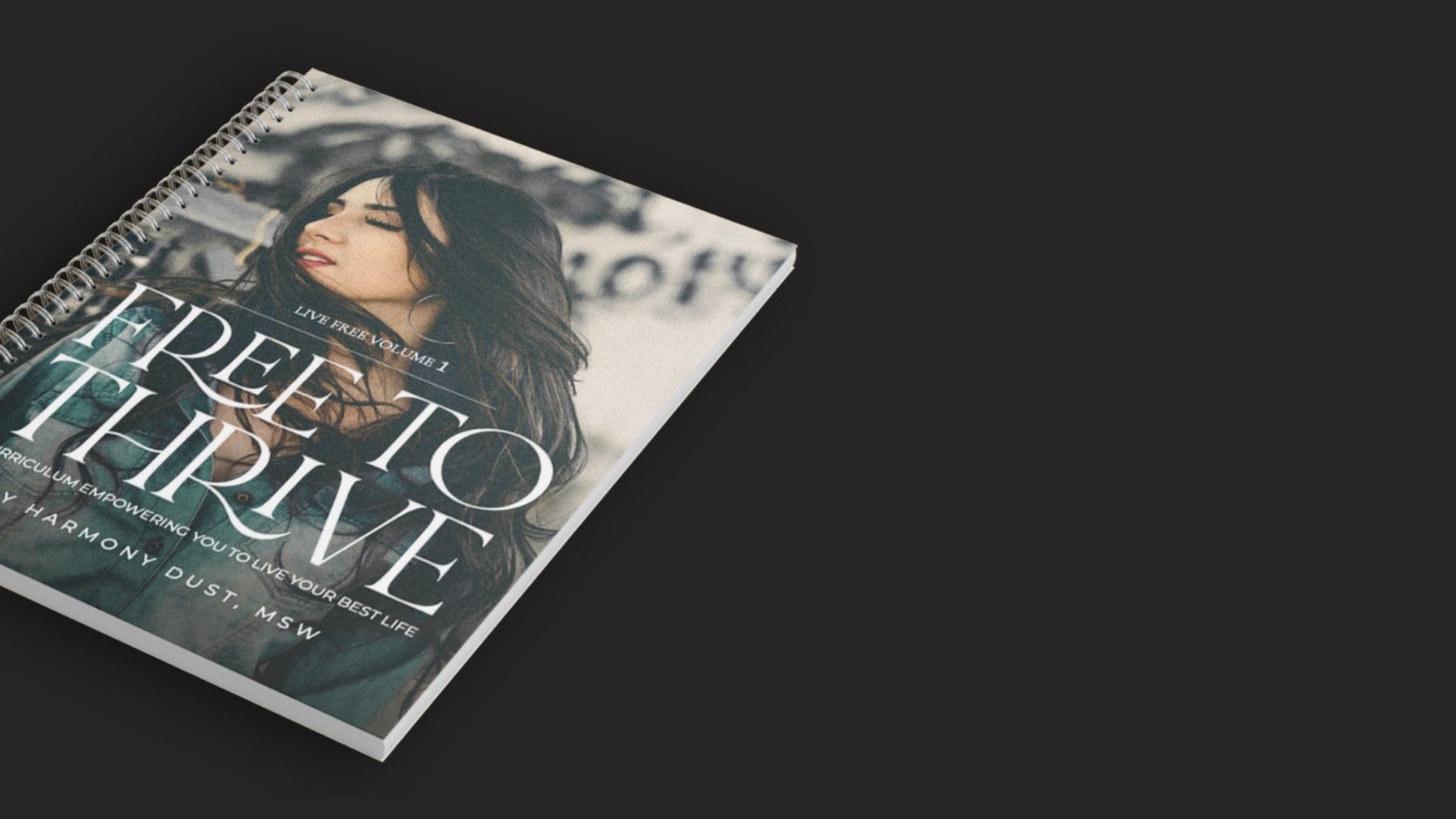
And if you’re ready for that, I created Free to Thrive.
Free to Thrive is a survivor-developed, trauma-informed workbook designed to help survivors of abuse, sexual exploitation, trafficking, and complex trauma understand how their experiences have shaped them, reconnect with who they are, develop healthier patterns and relationships, and take practical steps toward a life where they can truly thrive.
Because surviving what happened to you was one chapter.
You deserve the opportunity to discover what it means to thrive.
Dare to envision a life where you are not just surviving but thriving.
Take the first step today with the Live Free Curriculum Vol 1. and discover the power within to craft a future that's authentically yours.